
Cystocele Repair in Pune
Vaginal procedure
Cystocele Repair – Effective Treatment for Bladder Prolapse
Pelvic health concerns can be uncomfortable to discuss. Many women quietly live with symptoms like a feeling of heaviness in the vagina, urinary leakage, or difficulty emptying the bladder. Often, they assume it is a normal part of aging or childbirth.
However, these symptoms may indicate cystocele, also known as bladder prolapse. The condition is treatable, and early care can significantly improve comfort and confidence.
At Motherhood Hospital, Dr. Pallavi Tekale Deshpande provides compassionate and structured Cystocele Repair in Pune, helping women regain pelvic strength and improve daily quality of life. With over 10 years of experience in gynecology and reconstructive surgery, she ensures safe and respectful care.
What is Cystocele (Bladder Prolapse)?
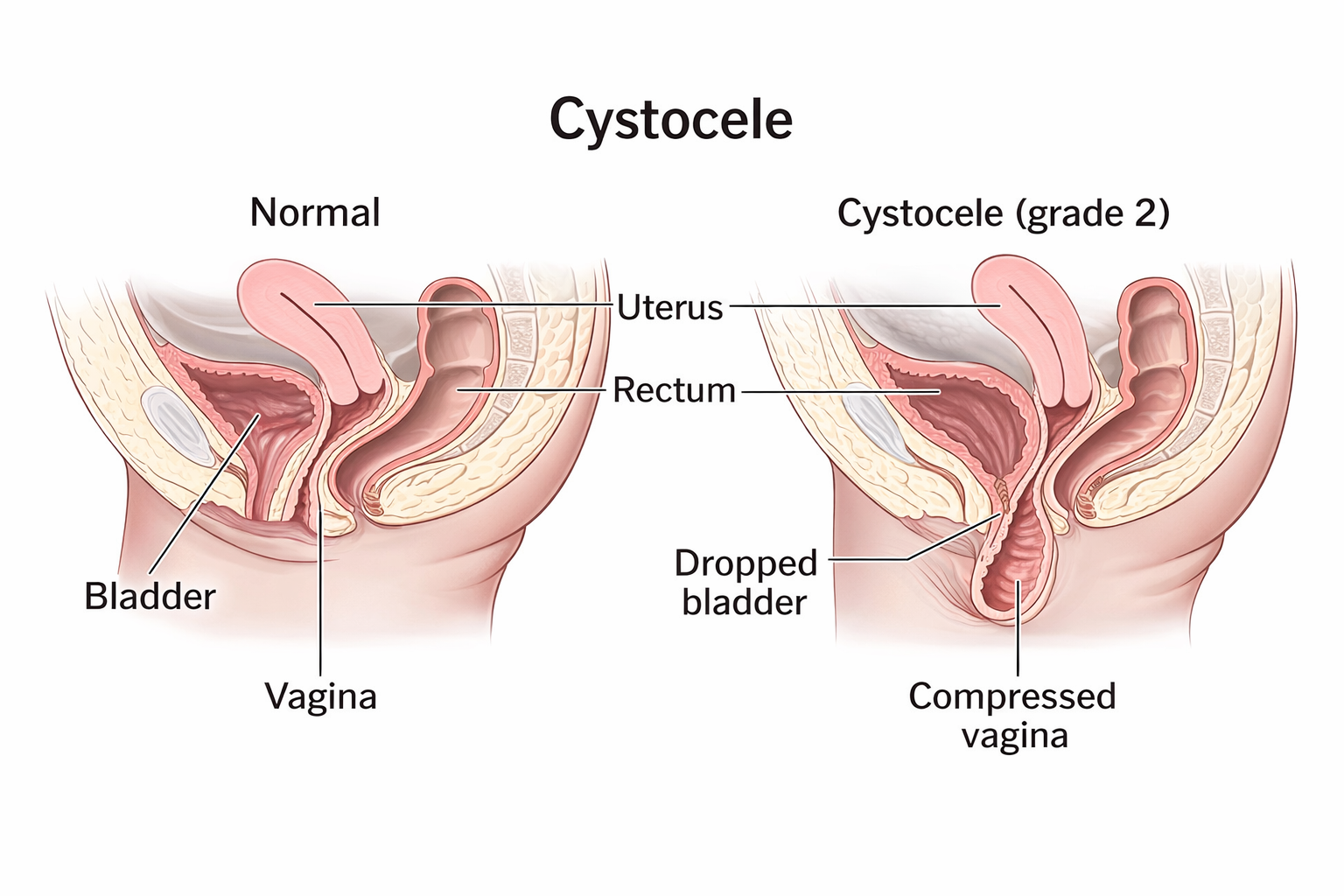
Cystocele occurs when the bladder drops from its normal position and bulges into the front wall of the vagina. This happens due to weakening of the pelvic floor muscles and supportive tissues.
The pelvic floor acts like a hammock, holding organs such as the bladder, uterus, and rectum in place. When this support weakens, prolapse can occur.
Early evaluation and appropriate Bladder Prolapse Treatment in Pune can prevent symptoms from worsening and restore comfort.
The severity of cystocele varies. Some women have mild symptoms, while others experience significant discomfort.
When Do You Need Cystocele Repair Surgery?
Not every cystocele requires surgery. Mild cases can often be managed conservatively.
However, Cystocele Repair in Pune may be recommended when:
- Symptoms interfere with daily life
- There is persistent urinary difficulty
- Conservative measures fail
- The prolapse becomes more severe
Surgery is considered only when necessary and after thorough discussion. The aim is to restore comfort and function.
Non-Surgical Treatment Options Before Surgery
Before recommending surgery, non-surgical treatments are usually explored. Pelvic floor exercises (Kegel exercises) help strengthen supportive muscles. Lifestyle modifications such as weight management and managing constipation reduce strain. In some cases, a vaginal pessary can provide temporary support. If these measures do not provide sufficient relief, Pelvic Organ Prolapse Surgery in Pune may be discussed as the next step.
How Cystocele Repair Surgery is Performed
During Cystocele Repair in Pune, the weakened front wall of the vagina is reinforced. The surgeon repositions the bladder and tightens supportive tissues. The procedure is typically performed through the vaginal route, which avoids visible abdominal scars. Dissolvable sutures are used to restore natural support. In selected cases, additional support materials may be considered, depending on severity. The surgery is performed under anesthesia, ensuring patient comfort.
Recovery After Cystocele Repair
Recovery is gradual but generally smooth. Most women stay in the hospital for a short period and return home within one or two days. Mild swelling, discomfort, or spotting may occur initially. Heavy lifting and strenuous activity should be avoided for about six weeks. Regular follow-up after Cystocele Repair in Pune ensures proper healing and optimal results. Pelvic floor exercises are often recommended to maintain long-term support.
Frequently Asked Questions (FAQs)
The procedure is performed under anesthesia, so there is no pain during surgery. After Cystocele Repair in Pune, mild discomfort is manageable with medication and usually improves within a few days.
Initial recovery takes about two weeks, while complete healing may take up to six weeks. Following post-operative advice ensures smooth healing after Cystocele Repair in Pune.
Yes, mild cases may be managed with pelvic floor exercises, lifestyle changes, or a pessary. However, moderate to severe prolapse may require surgical correction.
When performed by an experienced gynecologist, the procedure is safe and effective. Careful evaluation and follow-up minimize risks.
You should consult a qualified gynecologist or an experienced Urogynecologist in Pune for proper diagnosis and treatment planning.