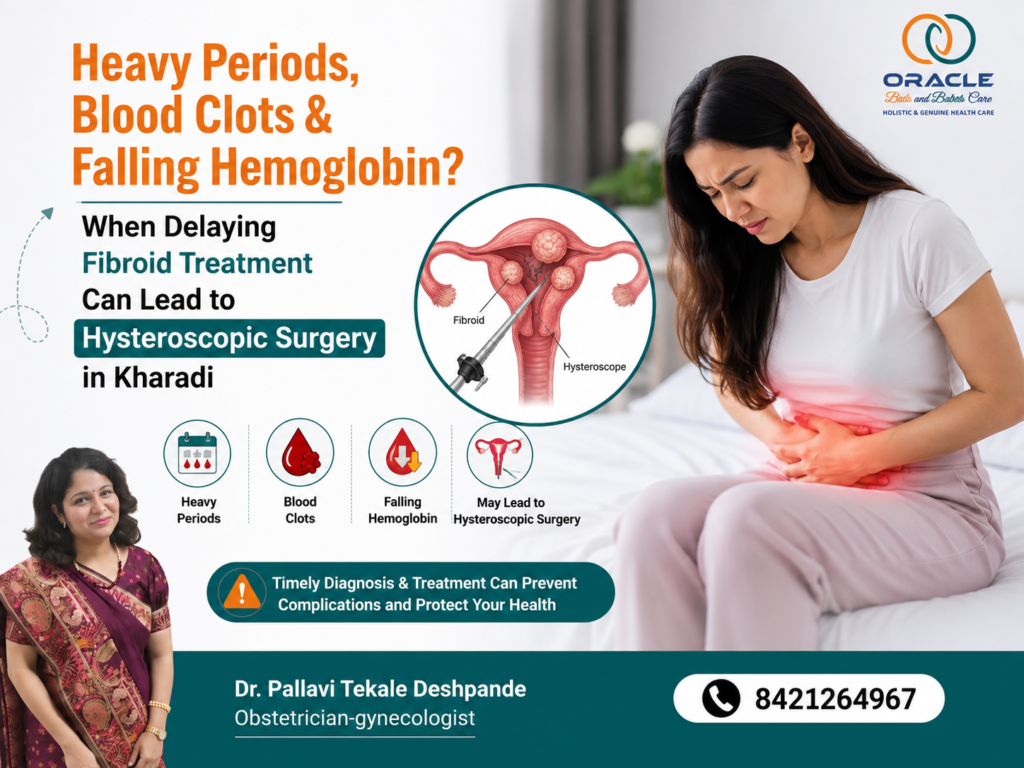
Women often assume that heavy periods are simply part of their body type, age, or hormonal changes. Many continue managing excessive bleeding month after month, believing it is normal to soak through pads every few hours, pass large blood clots, or feel constantly tired during menstruation.
Unfortunately, what many women don’t realize is that heavy menstrual bleeding can sometimes be a warning sign of underlying conditions such as uterine fibroids, uterine polyps, or other abnormalities inside the uterus.
When left untreated, these conditions can lead to chronic anemia, falling hemoglobin levels, fertility challenges, repeated hospital visits, and a significant impact on daily life.
At Oracle Birth & Women’s Care Clinic, Kharadi, Dr. Pallavi Tekale Deshpande, an experienced Gynecologist, Obstetrician, Fertility Specialist, and Laparoscopic Surgeon, frequently treats women who have spent months or even years ignoring symptoms that could have been addressed much earlier.
If your periods are becoming heavier, longer, or more painful, it may be time to understand what your body is trying to tell you.
Heavy Periods Are Not Always Normal
Most women know their normal menstrual pattern.
When periods suddenly become heavier than usual, last longer than expected, or begin affecting everyday life, it is important to investigate the cause rather than simply treating the symptoms.
Warning Signs Include:
• Changing pads every 1-2 hours
• Passing large blood clots
• Periods lasting more than 7 days
• Severe menstrual cramps
• Fatigue during or after periods
• Dizziness
• Falling hemoglobin levels
• Bleeding between periods
These symptoms are often associated with uterine fibroids, endometrial polyps, hormonal imbalance, or abnormalities within the uterine cavity.
Why Women Ignore Heavy Menstrual Bleeding for Too Long
One of the biggest reasons women delay treatment is because the condition develops gradually.
Many patients tell Dr. Pallavi Tekale Deshpande:
• “I thought it was normal after childbirth.”
• “I assumed it was because of age.”
• “I kept taking iron tablets.”
• “I thought it would improve on its own.”
Unfortunately, the longer the underlying condition remains untreated, the greater the risk of complications.
What Begins as Heavy Periods May Eventually Lead To:
• Chronic anemia
• Weakness and fatigue
• Reduced work productivity
• Fertility problems
• Recurrent hospital visits
• Increased surgical complexity
Early diagnosis often allows simpler treatment and faster recovery.
Uterine Fibroids: A Common Cause of Heavy Periods
Fibroids are non-cancerous growths that develop within or around the uterus.
They are extremely common among women of reproductive age.
While some fibroids remain small and symptom-free, others can cause significant problems depending on their size and location.
Common Symptoms Include:
Heavy Menstrual Bleeding
One of the most frequent complaints.
Large Blood Clots During Periods
A sign that excessive bleeding is occurring.
Pelvic Pressure
A feeling of heaviness in the lower abdomen.
Frequent Urination
Large fibroids may press on the bladder.
Fertility Problems
Certain fibroids can interfere with conception or pregnancy.
Recurrent Miscarriages
In selected cases, fibroids may affect pregnancy outcomes.
Not every fibroid requires surgery, but symptomatic fibroids should never be ignored.
Uterine Polyps Can Cause Similar Symptoms
Another common cause of abnormal bleeding is uterine polyps.
Polyps are growths that develop within the lining of the uterus.
Women may experience:
• Heavy periods
• Spotting between periods
• Irregular bleeding
• Difficulty conceiving
• Recurrent pregnancy loss
Because symptoms often overlap with fibroids, proper evaluation is essential.
This is where advanced diagnostic tools become extremely important.
Falling Hemoglobin: The Hidden Consequence Many Women Miss
Many women focus on the bleeding itself but overlook its impact on overall health.
Repeated heavy menstrual bleeding can gradually lower hemoglobin levels.
Common Symptoms of Anemia Include:
Constant Fatigue
Feeling tired despite adequate rest.
Dizziness
Particularly during periods.
Breathlessness
Even during routine activities.
Headaches
A common symptom of iron deficiency.
Difficulty Concentrating
Low oxygen levels affect mental performance.
Many women discover severe anemia only after blood tests reveal significantly reduced hemoglobin levels.
Treating anemia without treating the underlying cause often provides only temporary relief.
When Does Fibroid Treatment Become Necessary?
Treatment decisions depend on:
• Severity of symptoms
• Size of fibroids
• Fibroid location
• Future pregnancy plans
• Hemoglobin levels
• Overall health
You Should Seek Medical Evaluation If:
• Heavy periods affect daily life
• Iron levels continue to drop
• Blood clots become larger
• Pelvic pain increases
• Fertility becomes a concern
• Bleeding occurs between periods
Early intervention can often prevent more extensive treatment later.
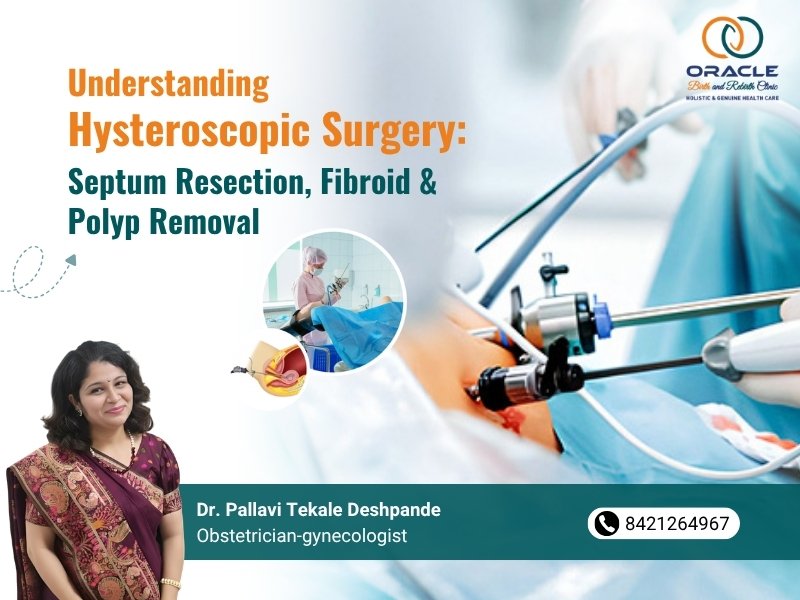
What Is Hysteroscopic Surgery?
Many women become anxious when they hear the word “surgery.”
However, hysteroscopic surgery is very different from traditional open surgery.
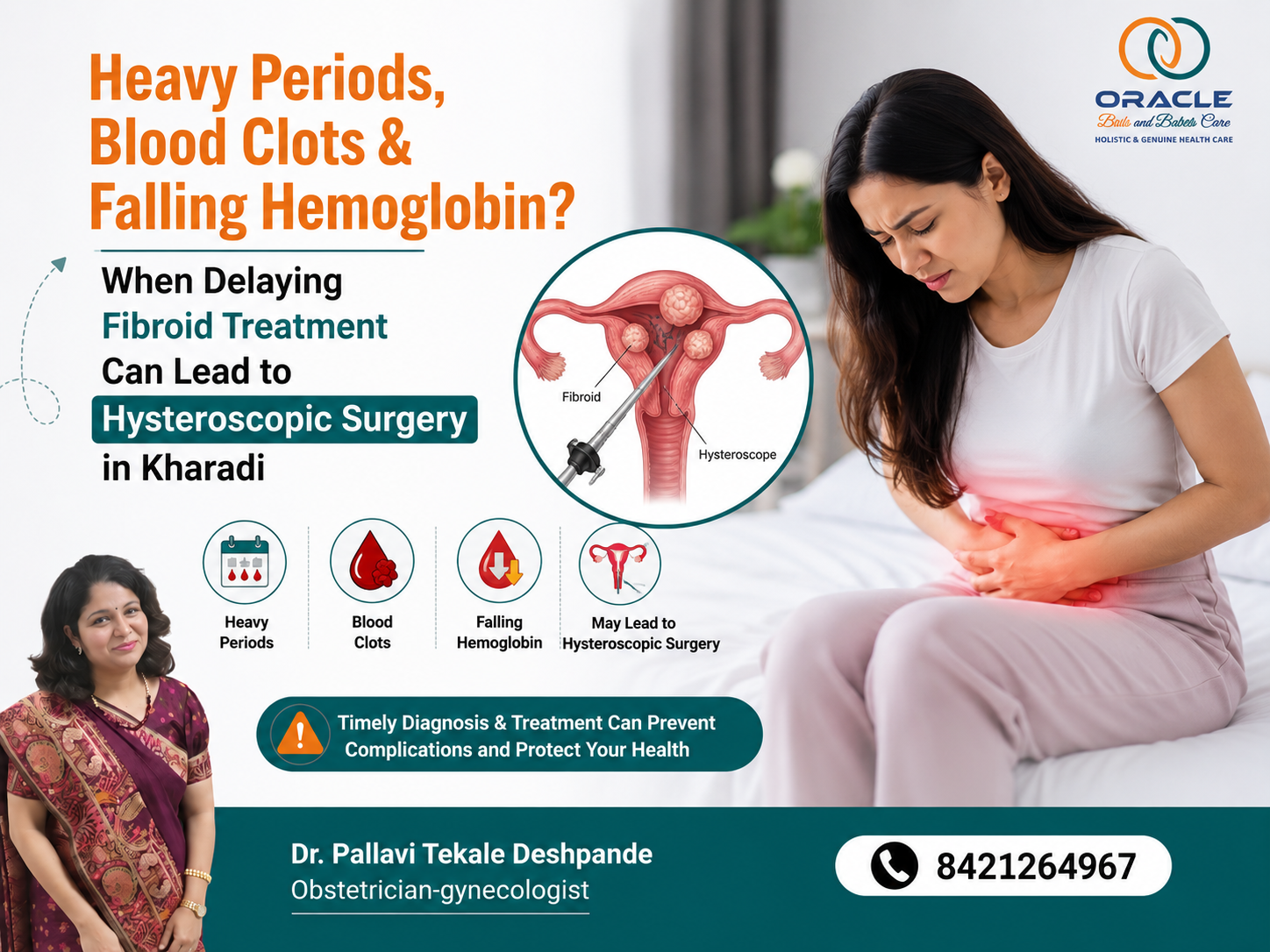
A hysteroscope is a thin instrument inserted through the natural opening of the cervix to visualize the inside of the uterus.
This allows the surgeon to diagnose and treat problems without external cuts or stitches.
Hysteroscopic Procedures Are Commonly Used For:
• Uterine polyps
• Submucosal fibroids
• Abnormal uterine bleeding
• Uterine cavity abnormalities
• Fertility-related uterine conditions
Because there are no abdominal incisions, recovery is generally faster compared to traditional surgery.
When Might Hysteroscopic Surgery Be Recommended?
Dr. Pallavi Tekale Deshpande may recommend hysteroscopic surgery when:
Fibroids Are Located Inside the Uterine Cavity
These are often responsible for heavy bleeding and fertility issues.
Uterine Polyps Are Causing Symptoms
Polyps can often be removed hysteroscopically.
Heavy Bleeding Does Not Improve
When medical treatment fails to control symptoms.
Fertility Is Being Affected
Certain uterine abnormalities can interfere with implantation and pregnancy.
Recurrent Miscarriages Need Investigation
Hysteroscopy can help identify structural causes.
Every patient requires individualized evaluation before determining the most appropriate treatment approach.
Benefits of Hysteroscopic Surgery
Women often prefer hysteroscopic treatment because of several advantages.
No External Cuts
The procedure is performed through the cervix.
Faster Recovery
Many women return to routine activities sooner.
Minimal Scarring
No visible abdominal scars.
Improved Diagnosis
Direct visualization of the uterine cavity.
Fertility Preservation
Often beneficial for women planning future pregnancies.
Why Women in Kharadi, Mundhwa & Thite Nagar Trust Dr. Pallavi Tekale Deshpande
Women across Kharadi, Mundhwa, Thite Nagar, Wagholi, Hadapsar, Viman Nagar, and nearby Pune areas seek care from Dr. Pallavi Tekale Deshpande for:
• Heavy Period Treatment
• Fibroid Management
• Uterine Polyp Treatment
• Hysteroscopic Surgery
• Fertility Evaluation
• PCOS Management
• Pregnancy Care
• Minimally Invasive Gynecological Procedures
At Oracle Birth & Women’s Care Clinic, every patient receives personalized evaluation and treatment planning based on her symptoms, reproductive goals, and overall health.
Frequently Asked Questions
Are heavy periods always caused by fibroids?
No. Heavy bleeding may result from fibroids, polyps, hormonal imbalance, adenomyosis, or other gynecological conditions.
Can fibroids cause low hemoglobin?
Yes. Heavy menstrual bleeding caused by fibroids can lead to chronic anemia.
Is hysteroscopic surgery painful?
The procedure is typically performed under appropriate anesthesia for patient comfort.
Will hysteroscopic surgery affect fertility?
In many cases, hysteroscopic treatment may improve fertility by correcting abnormalities within the uterine cavity.
Do all fibroids require surgery?
No. Treatment depends on symptoms, size, location, and reproductive plans.
How do I know if my bleeding is abnormal?
If periods are becoming heavier, lasting longer, producing large clots, or causing anemia, medical evaluation is recommended.
Book a Consultation for Heavy Periods & Fibroid Treatment in Kharadi
Heavy periods should never be dismissed as something you simply have to live with.
If you are experiencing excessive bleeding, blood clots, fatigue, falling hemoglobin levels, or have been diagnosed with fibroids or uterine polyps, early treatment can prevent complications and improve your quality of life.
Dr. Pallavi Tekale Deshpande at Oracle Birth & Women’s Care Clinic, Kharadi provides comprehensive evaluation and advanced treatment for women across Kharadi, Mundhwa, Thite Nagar, Wagholi, Hadapsar, Viman Nagar, and Pune, helping women regain control of their health with modern gynecological care.